

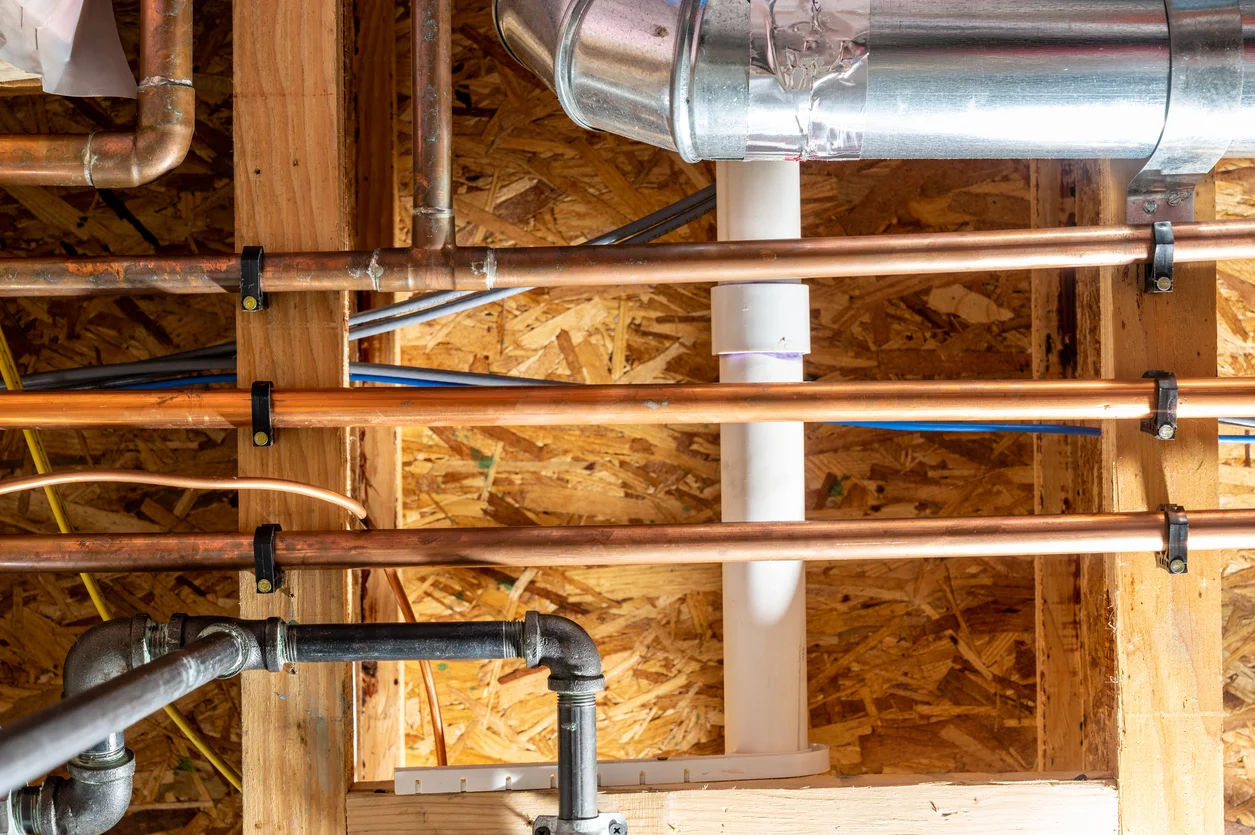
The first leak never feels like a big deal.
A little stain on the ceiling. A quick patch in the wall. A repair bill that hurts but doesn't break the budget.
Then a year or two later, a new drip shows up across the house. Maybe the water pressure isn't what it used to be. Maybe you've already repaired a leak under the slab, and now there's another issue somewhere else.
At some point, most homeowners start asking the same question:
"Do I keep fixing these problems, or is it time to replace the pipes?"
For many older Inland Empire homes, that's a fair question.
Between hard water, aging plumbing materials, shifting soil, and decades of daily use, there comes a point where repairs become less practical than addressing the system as a whole. The challenge is figuring out where that point is.
Why Older Homes Face More Plumbing Problems
Every plumbing system ages differently.
A well-maintained home may go decades with very few issues, while another property of the same age develops recurring leaks, corrosion, and water pressure problems.
Part of the reason is simple wear and tear. Pipes are constantly exposed to water, temperature changes, and pressure fluctuations.
In the Inland Empire, hard water adds another challenge. Mineral deposits slowly build up inside pipes over time, reducing flow and creating rough surfaces where corrosion can develop more easily.
Many older homes also have plumbing lines running beneath slab foundations. When problems develop below the concrete, homeowners often don't notice them immediately. What starts as a small leak can continue for months before visible symptoms appear.
Some Pipe Materials Age Better Than Others
One of the quickest ways to evaluate repiping risk is to identify what kind of piping is currently in the home.
Galvanized Steel Pipes
Galvanized steel was commonly installed in homes built before the 1970s.
The problem is that galvanized pipes deteriorate from the inside out. Over time, corrosion narrows the interior opening, restricting water flow and increasing the likelihood of leaks.
Common warning signs include:
- Rust-colored water
- Reduced water pressure
- Frequent leaks
- Uneven flow between fixtures
If a home still has original galvanized piping, repeated plumbing problems often point toward a larger system issue rather than an isolated repair.
Polybutylene Pipes
Polybutylene was installed in many homes from the late 1970s through the mid-1990s.
Although popular at the time, it eventually developed a reputation for unexpected failures. Municipal water treatment chemicals can gradually weaken the material, causing it to become brittle over time.
Many homeowners don't discover there's a problem until a pipe suddenly cracks or bursts.
Older Copper Plumbing
Copper remains one of the most durable plumbing materials available, but it isn't immune to aging.
After decades of service, some copper systems begin developing pinhole leaks. A single pinhole leak isn't necessarily a reason to repipe. Multiple leaks appearing throughout the home can be a different story.
Signs You May Be Dealing With More Than a Simple Repair
Not every plumbing problem requires a whole-house repipe.
The key is identifying patterns.
Leaks Keep Appearing in Different Areas
One leak can happen in any home.
When leaks begin showing up in multiple locations over a relatively short period, it often suggests the pipes themselves are wearing out.
For example:
- A bathroom leak this year
- A kitchen leak the following year
- A slab leak shortly after
That pattern is usually more meaningful than any single repair.
Water Pressure Continues to Decline
Water pressure problems often develop gradually.
At first, it may only affect a shower or outdoor hose bib. Eventually, multiple fixtures throughout the house begin experiencing the same issue.
When pressure drops throughout the entire home, aging pipes, mineral buildup, or corrosion may be restricting flow from the inside.
Water Looks Discolored
Brown, yellow, or rust-colored water can indicate corrosion within older piping systems.
If discoloration appears from multiple fixtures rather than a single faucet, the plumbing system itself deserves closer evaluation.
Plumbing Repairs Are Becoming Routine
Most homeowners expect occasional maintenance.
What raises concern is when plumbing repairs start becoming a regular part of homeownership.
If you're scheduling leak repairs every year—or every few months—it may be time to step back and look at the condition of the overall system.
Repair or Repipe? Here's a Practical Way to Look at It
This decision usually comes down to two questions:
How widespread is the problem?
And how often are you paying to fix it?
Repairs often make sense when:
- The issue is isolated
- The rest of the plumbing system is in good condition
- There is no history of recurring problems
- The piping material still has useful life remaining
Repiping becomes more attractive when:
- Leaks continue appearing throughout the home
- Water pressure problems affect multiple fixtures
- Corrosion is widespread
- Repairs are becoming frequent
- Existing pipe materials are nearing the end of their lifespan
Sometimes homeowners discover they've spent thousands of dollars over several years chasing individual plumbing issues. In those situations, continuing to patch the system may cost more in the long run than replacing it.
Choosing Between PEX and Copper
If repiping becomes necessary, homeowners generally choose between PEX and copper.
Both are proven materials, but each has advantages.
PEX
PEX has become a popular choice for whole-house repiping because it is flexible, resistant to corrosion, and often requires fewer wall openings during installation.
Benefits include:
- Resistance to mineral buildup
- Flexibility
- Lower installation costs
- Fewer fittings and connections
Copper
Copper remains a trusted option because of its long history and durability.
Many homeowners prefer copper because it performs well under high temperatures and has a proven track record spanning decades.
The best choice depends on your home's layout, plumbing configuration, and budget.
What Homeowners Can Expect During a Repiping Project
One of the biggest misconceptions about repiping is that it requires weeks of disruption.
Most projects move much faster than homeowners expect.
The process generally includes:
- Evaluating the current plumbing system
- Designing the replacement layout
- Installing new water lines
- Pressure testing the system
- Completing required inspections
While some drywall access is typically necessary, experienced plumbers work to minimize openings whenever possible.
For many homes, the actual plumbing work can be completed within a few days.
Don't Wait for a Major Failure to Make the Decision
Most homeowners don't decide to repipe after the first leak.
They decide after years of recurring repairs, mounting costs, and uncertainty about what will fail next.
The goal isn't to replace pipes prematurely. It's to recognize when the system is telling you it's nearing the end of its useful life.
If you're seeing recurring leaks, declining water pressure, discolored water, or a growing list of plumbing repairs, it may be time to get a professional opinion.
When a Professional Evaluation Makes Sense
A thorough plumbing inspection can help determine whether you're dealing with isolated repairs or a system-wide problem.
For homeowners throughout the Inland Empire, Scott McLeod Plumbing provides leak detection, water pressure repair, repiping services, and general plumbing services.
If you're trying to decide whether repair or replacement makes the most sense for your home, call (909) 346-2737 or message us online for expert advice.